
Newsletters
The header image is the default header image for the site.The Essentials of Saving and Investing: Building a Secure Financial Future
POSTED: March 18th, 2024
POSTED IN: 2024 Quarter 1, EM Pulse - The Official Newsletter of MOCEP,
Written by: Michael T. Carpenter, JD, CPA, CFP®
Saving and investing are crucial aspects of personal finance that empower individuals to secure their financial future and build wealth over time. By making wise financial decisions, individuals can leverage the power of compound growth and ensure a comfortable retirement.

This article will delve into the fundamentals of investing, from understanding investment vehicles and asset allocation to creating a solid financial plan.
Five Core Tenets of Successful Investors
Successful investors tend to demonstrate a mastery of key principles that underpin their financial success.
First and foremost, they exhibit a remarkable command over their spending and saving habits, recognizing the importance of striking a balance between enjoying the present and securing their financial future.
Additionally, emotional discipline is a hallmark of their approach, allowing them to resist the allure of market euphoria and panic.
Successful investors also understand the significance of disciplined portfolio rebalancing, recognizing that maintaining a strategic asset allocation is crucial for long-term success.
Furthermore, they prioritize diversification, spreading their investments across different asset classes to mitigate risk.
Finally, successful investors exercise control over fees and expenses, ensuring that the costs associated with their investments are carefully managed – ultimately maximizing returns over time.
In essence, their success is grounded in a comprehensive and disciplined approach to financial management.
Prioritizing Spending and Saving
One of the fundamental principles of investing is finding a balance between spending now and saving for the future. It’s important to cover essential expenses and enjoy life’s pleasures, but setting aside a portion of your income for saving and investing is equally essential. The sooner you start saving, the more time your investments have to grow.
Save Early and Save Often
Saving early and consistently is key to allowing the power of compound growth to work for you. Compounding means that the returns earned on your investments also generate returns, creating a snowball effect. The earlier you start, the less you’ll need to save each month over time to reach your financial goals.
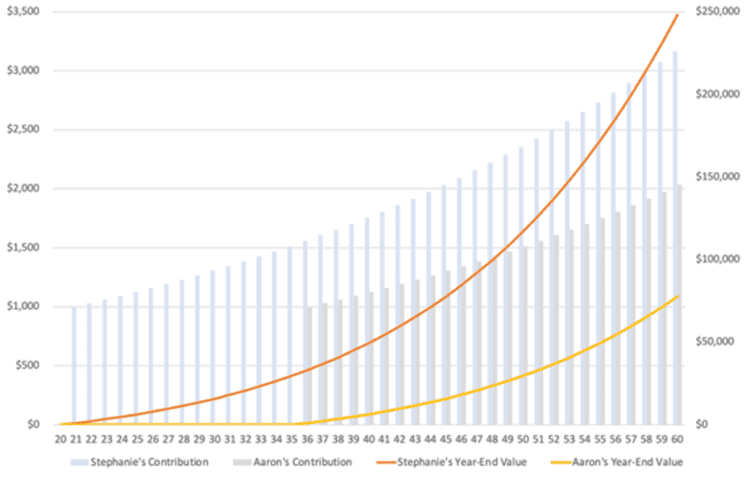
By way of example, let’s assume Stephanie and Aaron are the same age and in the same financial situation. Stephanie begins saving $1,000 monthly at age 21 and increases her savings 3% annually. Let’s also assume her investments produce a 6% annual compound rate of return. Aaron, on the other hand, delays his savings efforts until age 36 and, similarly, he increases the savings 3% annually.
The chart below concludes that Stephanie has substantially more than Aaron at age 60.
Risk Tolerance and Its Impact
Risk tolerance is a personal assessment of how comfortable you are with the potential ups and downs in your investments. Your risk tolerance will influence your asset allocation decisions. If you’re risk-averse, you may lean more towards bonds and cash equivalents; risk-tolerant investors may focus on stocks.
Understanding Asset Allocation and Portfolio Rebalancing
Asset allocation is the process of diversifying your investments across different asset classes, such as stocks, bonds, and cash equivalents. The goal is to balance risk and return according to your financial goals and risk tolerance.
Once the asset allocation is established, the portfolio should be reviewed periodically to adjust the investments back in line with the initial allocation. This is called portfolio rebalancing. It helps manage risk and ensures that you don’t become too heavily invested in one asset class.
The Importance of Diversification
Diversifying your investments across various asset classes and geographic regions helps spread risk. A diversified portfolio can help mitigate losses during market downturns and enhance long-term returns.
Understanding Investment Types
Equity investments – like stocks – represent ownership in a company. Fixed-income investments – like bonds – represent loans to organizations or governments. Alternative investments encompass a wide range of assets, from real estate to commodities.
Mutual Funds and ETFs
Mutual funds and exchange-traded funds (ETFs) allow investors to pool their money to invest in a diversified portfolio of assets. These investment vehicles are cost-effective ways to achieve diversification.
Employer-Provided Retirement Plans
Participating in employer-provided retirement plans – like 401(k)s or 403(b)s – is a smart move. If your employer offers a match, it’s essentially free money. For instance, if your employer matches your contributions up to a certain percentage, you’re receiving a 100% return on your investment immediately on the amount matched.
Utilize Tax-Preferred Investment Vehicles
Tax-advantaged accounts – like Roth IRAs, traditional IRAs, 529 college savings accounts, Health Savings Accounts (HSAs), and Flexible Spending Accounts (FSAs) – offer tax benefits that can be valuable components of a financial plan and may help increase savings. Each type of account has its unique advantages – such as tax-free withdrawals in the case of Roth IRAs, and tax deductions for traditional IRAs.
Estate Planning and Insurance
Creating a formal estate plan – including a last will and testament, financial power of attorney, health care power of attorney, and possibly a revocable trust – is essential to ensure your assets are distributed according to your wishes. Additionally, it is advised to review your insurance coverage periodically to ensure it adequately protects your assets and loved ones.
Consider Working with a Financial Advisor
For those who find investing complex or want personalized guidance, working with a professional financial advisor is an option. They can help you navigate the intricacies of the investment landscape and tailor a strategy that aligns with your goals and risk tolerance.
In conclusion, saving and investing are powerful tools for securing your financial future, and mastering the fundamentals is a key step in achieving your financial goals. By prioritizing saving, leveraging compound growth, participating in employer plans, utilizing tax-advantaged accounts, and adopting a disciplined approach, you can build a robust financial portfolio that paves the way for a secure and comfortable future. Remember the core tenets of successful investing, and take a diversified, long-term approach to grow your wealth while protecting your assets through effective estate planning and insurance coverage.
© 2023 Moneta Group Investment Advisors, LLC. All rights reserved. The information contained herein is for informational purposes only, is not intended to be comprehensive or exclusive, and is based on materials deemed reliable, but the accuracy of which has not been verified. Examples contained herein are for illustrative purposes only based on generic assumptions. Given the dynamic nature of the subject matter and the environment in which this communication was written, the information and opinions contained herein are subject to change. This is not an offer to sell or buy securities, nor does it represent any specific recommendation. You should consult with an appropriately credentialed professional before making any financial, investment, tax or legal decision. Past performance is not indicative of future returns. All investments are subject to a risk of loss. Diversification and strategic asset allocation do not assure profit or protect against loss in declining markets. These materials do not take into consideration your personal circumstances, financial or otherwise. An index is an unmanaged portfolio of specified securities and does not reflect any initial or ongoing expenses nor can it be invested in directly. Exposure to an asset class represented by an index may be available through investable instruments based on that index.